



Soft versus Structured Tailoring
To the uninitiated, a sports coat is a sports coat and a suit jacket is a suit jacket. They all have the same basic anatomy – front-closures, lapels, pockets, buttoning sleeves, vents, and run from the neck to somewhere around the seat – so they’re ultimately the same garment, right?
Well, not quite. To highly attuned sartorialists, a jacket is a completely different proposition depending on the tailoring you opt for: and one of the most crucial distinctions to know about is structured, versus soft, tailoring. The uninitiated will only notice the difference on a subliminal level: for the style-savvy, though, the difference just as profound as that between a mechanical wristwatch and an automatic one is to those well-versed in horology.
The distinction lies in how the jacket is assembled – and, the consequent shape it creates around the body. Silhouette is the quiet architect here. It determines whether a jacket feels formal or relaxed, authoritative or easy-going. Understanding the construction is key to getting it right for your tastes, body and lifestyle. And understanding the construction involves understanding the history.

Shouldering On: Structured Tailoring’s Military Ties
Should the sartorially curious reader find themselves in the British capital any time soon, make a beeline for the No. 1 Savile Row: the premises of Gieves & Hawkes. Walk up the stairs to the first floor and you’ll find, displayed in glass cases, various military uniforms embellished with gold tassels and braided cord aiguillettes.
Gieves & Hawkes has supplied uniforms to the Royal Navy, the British Army and the Royal Airforce since its founding in 1771, and still holds warrants for the royal family’s dressing needs when it comes to military, ceremonial regalia. Check out how boldly the uniforms project discipline and authority: think clean, sharp lines throughout, upright posture, broad shoulders, suppressed waists that emphasise a V-shaped torso and imperious, heavily structured shoulders.
This basic styling – framing and imposing shape onto the body rather than following it – for decades defined what “proper” tailoring looked like. It conveyed authority in the boardroom just as effectively as it once had on parade.
Soft Sell: A Fluid Approach Emerges
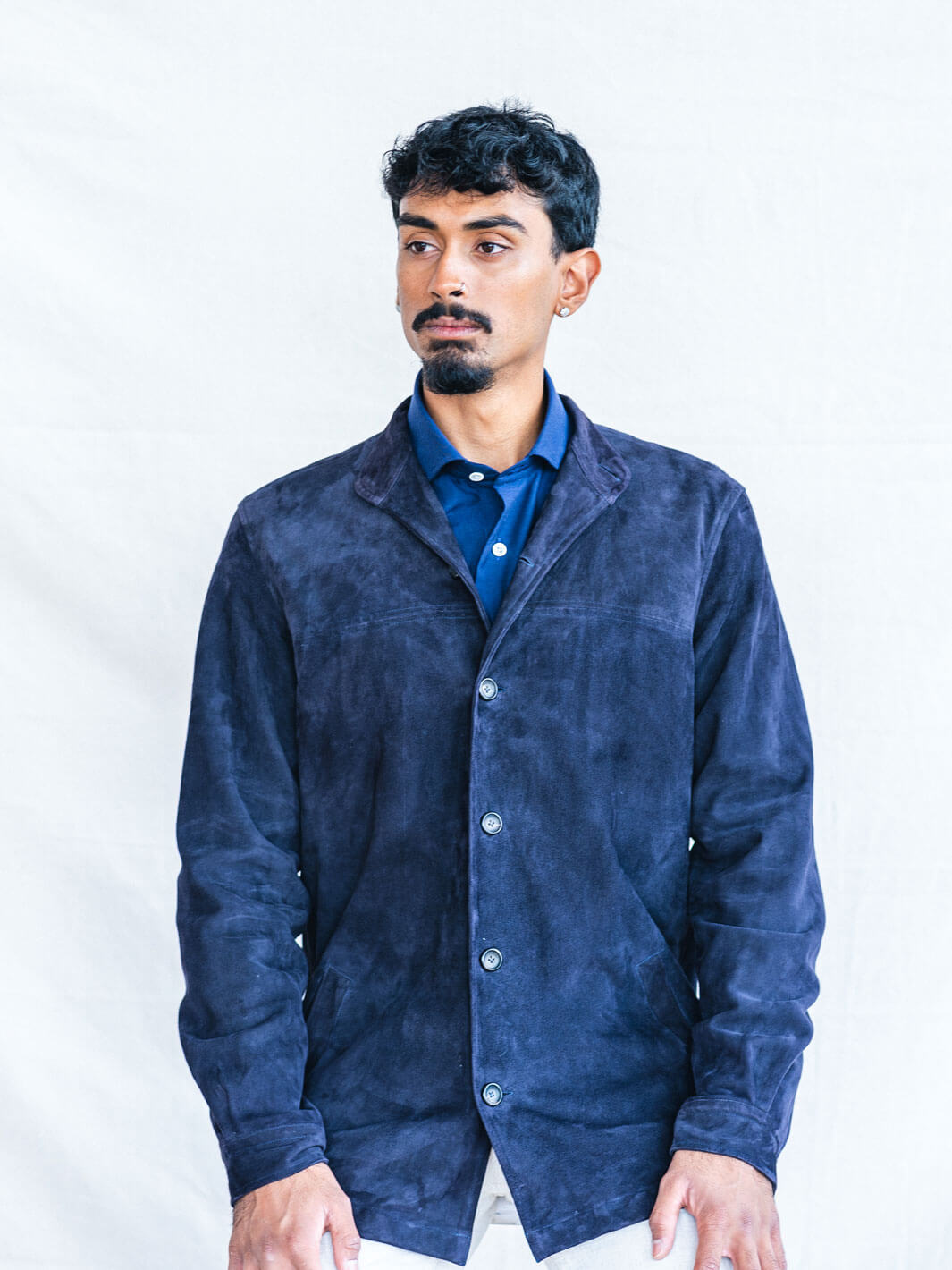
In the 1930s, in Naples, a warmer climate and a relaxed social rhythm persuaded the city’s tailors to start stripping the internal architecture – padding, canvassing and so on – out of jackets so that they would follow the lines of the human body more naturally and respond to its movements rather than dictate it. Natural shoulders, often with little to no padding; lightweight or partial canvassing; a gentler drape across the chest; a shoulder that slopes with the body on which it’s resting, rather than begging for a passer-by to place a spirit level on it to test its integrity.
Around the same time on Savile Row – and responding to the same cultural shifts in menswear, if not the same climatic factors – a Dutch tailor by the name of Frederick Scholte, working at Anderson & Sheppard, was redefining the basic architecture of English suiting.
What Scholte came up with retained the hallmarks of classic English tailoring – its emphasis on balance, a defined waist, and an overall sense of formality – but subtly transformed its rigid structure by introducing a fuller, more elastic chest and softer construction, allowing the garment to move with the body. And America quickly took note.

Silver Screen Roles: Hollywood and the Soft Drape
“Acting,” as Al Pacino once said, “is a sport. On stage, you must be ready to move like a tennis player on his toes.” His observation is incontestable and applies to the screen as well as the stage. Lucidity of movement, for silver screen stars, is everything, so it’s little wonder so many actors in the 1930s and 40s caught onto the soft drape tailoring emerging in London, and saw the opportunity for clothes that moved with them – flowing rather than constricting – yet still looked smart and composed under the scrutiny of the camera.
Fred Astaire – a Hollywood legend who, I think we can all agree, required more freedom of movement for his on-screen performances than his contemporaries – is perhaps the most famous exponent of the soft drape cut on screen. Cary Grant (see 1959’s In North by Northwest, and pieces tailored by Savile Row's Kilgour) also favoured the style. The "drape cut" has a high armhole, which is great for maintaining silhouette in action scenes: so it’s little wonder James Bond is a fan (Roger Moore opts for it in his early James Bond films, and check out Sean Connery’s breezy two-pieces, the work of 1960s designer legend Doug Hayward, in Never Say Never Again).

Making A Choice That Makes the Cut
Anatoly & Sons’ bespoke or made-to-measure divisions will turn their artisanal hand, with authenticity and panache, to either structured or soft tailoring. But as is nearly always the case with modern dressing, you don’t face a binary choice.
Which you should choose has nothing to do with rules and everything to do with context. If you want presence (for formal settings, business environments, or occasions where a clear silhouette matters), structured tailoring offers clarity and sharpness. If you want versatility –something that works across settings, that feels natural rather than imposed – soft tailoring tends to be more forgiving.
But you can make your pitch anywhere in between, taking into account not only how and where you’re going to wear a suit of sports jacket but taking your own build into account too. Structured jackets can enhance shape, particularly for slimmer frames, while soft tailoring often flatters by working with what’s already there rather than reshaping it. Structure draws the lines. Softness blurs them. Both, when done well, can look entirely right. So can somewhere in between. And getting it right involves talking to your tailor about silhouette and outline, in relation to your own stature and anatomy, from an informed perspective.


